The “Invisible Kitchen”: Designing for Efficiency Without Increasing Footprint
In many restaurant projects, space is one of the most limiting factors. Operators often assume that improving kitchen performance requires expanding square footage. However, increasing the physical size of a kitchen does not always lead to better results. In many cases, it introduces new inefficiencies.
An alternative approach focuses on designing what can be described as an “invisible kitchen.” This concept centers on maximizing efficiency within the existing footprint by optimizing layout, workflow, and equipment placement. The result is a kitchen that performs at a higher level without requiring additional space.
Efficiency Is Not About Size
A larger kitchen may seem like a solution to operational challenges, but more space can create longer travel paths, communication gaps, and unnecessary movement. When stations are spread too far apart, even simple tasks take more time.
An efficient kitchen is not defined by how much space it has. It is defined by how well that space is used. The goal is to minimize friction in daily operations, allowing staff to move naturally and complete tasks with fewer steps.
The “invisible kitchen” approach focuses on reducing wasted motion rather than increasing square footage.

Designing Around Movement
Every kitchen has patterns of movement that develop during service. Staff move between stations, retrieve ingredients, plate dishes, and communicate with one another. When these movements are not considered during design, they can lead to congestion and delays.
A well-designed layout considers:
- The most frequent movement paths during peak service
- The proximity of related stations
- The placement of shared resources such as refrigeration and prep areas
By aligning the layout with actual workflow, the kitchen begins to function more smoothly. Movement becomes intuitive rather than forced.

Strategic Equipment Placement
Equipment selection is important, but placement is what determines how effectively it is used. In an “invisible kitchen,” equipment is positioned to support workflow rather than dictate it.
For example:
- High-use equipment is placed within immediate reach of the stations that rely on it
- Prep and cooking areas are aligned to reduce back-and-forth movement
- Storage is integrated into the workflow rather than separated from it
This approach reduces unnecessary steps and allows staff to maintain focus during service.

Eliminating Bottlenecks
Bottlenecks are one of the most common causes of slow service. They occur when multiple tasks converge in a single area or when movement is restricted.
In smaller kitchens, bottlenecks can become more pronounced if the layout is not carefully planned. However, they can often be eliminated through thoughtful design.
Key strategies include:
- Separating high-traffic zones
- Creating clear pathways between stations
- Ensuring that no single area becomes overloaded during peak periods
When bottlenecks are removed, the kitchen can handle higher volumes without increasing its size.
Designing for Peak Performance
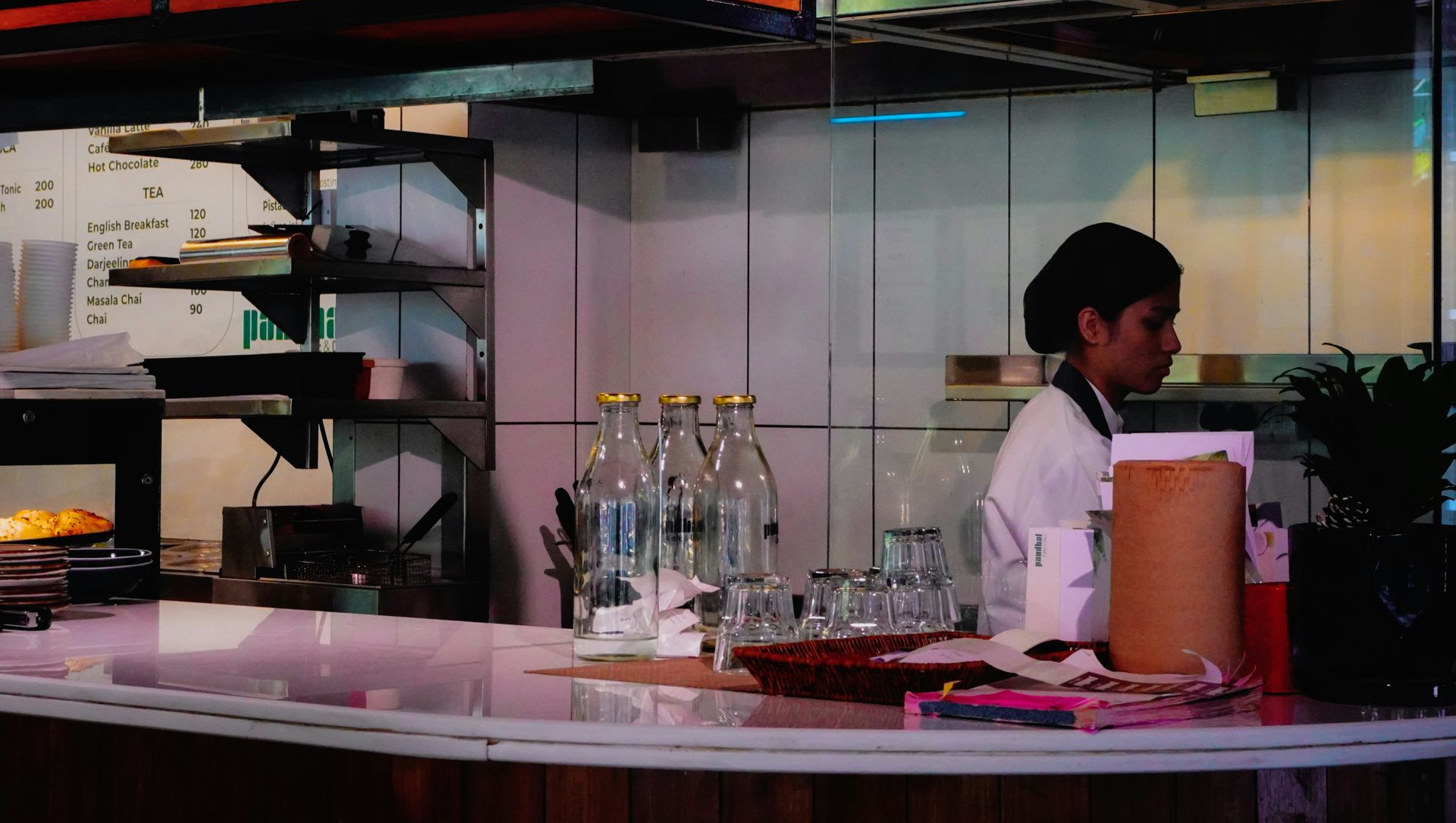
A kitchen should be designed for its busiest moments, not its slowest. During peak service, even minor inefficiencies can become significant obstacles.
An “invisible kitchen” anticipates these conditions by:
- Allowing multiple tasks to occur simultaneously without interference
- Supporting clear communication between staff
- Reducing the need for repositioning or adjustment during service
This level of planning ensures that the kitchen performs consistently, even under pressure.
The Role of Turnkey Design
Achieving this level of efficiency requires coordination across multiple stages of a project. Layout, equipment selection, and installation must all align with the intended workflow.
Turnkey solutions simplify this process by integrating design and execution into a single, cohesive plan. This reduces the risk of misalignment between concept and implementation.
When every element is considered together, the result is a kitchen that operates as a unified system.
A Smarter Way to Think About Space
The idea of an “invisible kitchen” challenges the assumption that more space is always better. Instead, it emphasizes precision, planning, and intentional design.
By focusing on how space is used rather than how much is available, restaurants can achieve higher efficiency without increasing their footprint.
Coast 2 Coast Solutions specializes in turnkey commercial kitchen design that prioritizes performance, workflow, and long-term operational success. If you are looking to create a kitchen that works smarter within your existing space, contact Coast 2 Coast Solutions to learn how a more strategic approach to design can transform your operation.